Categories
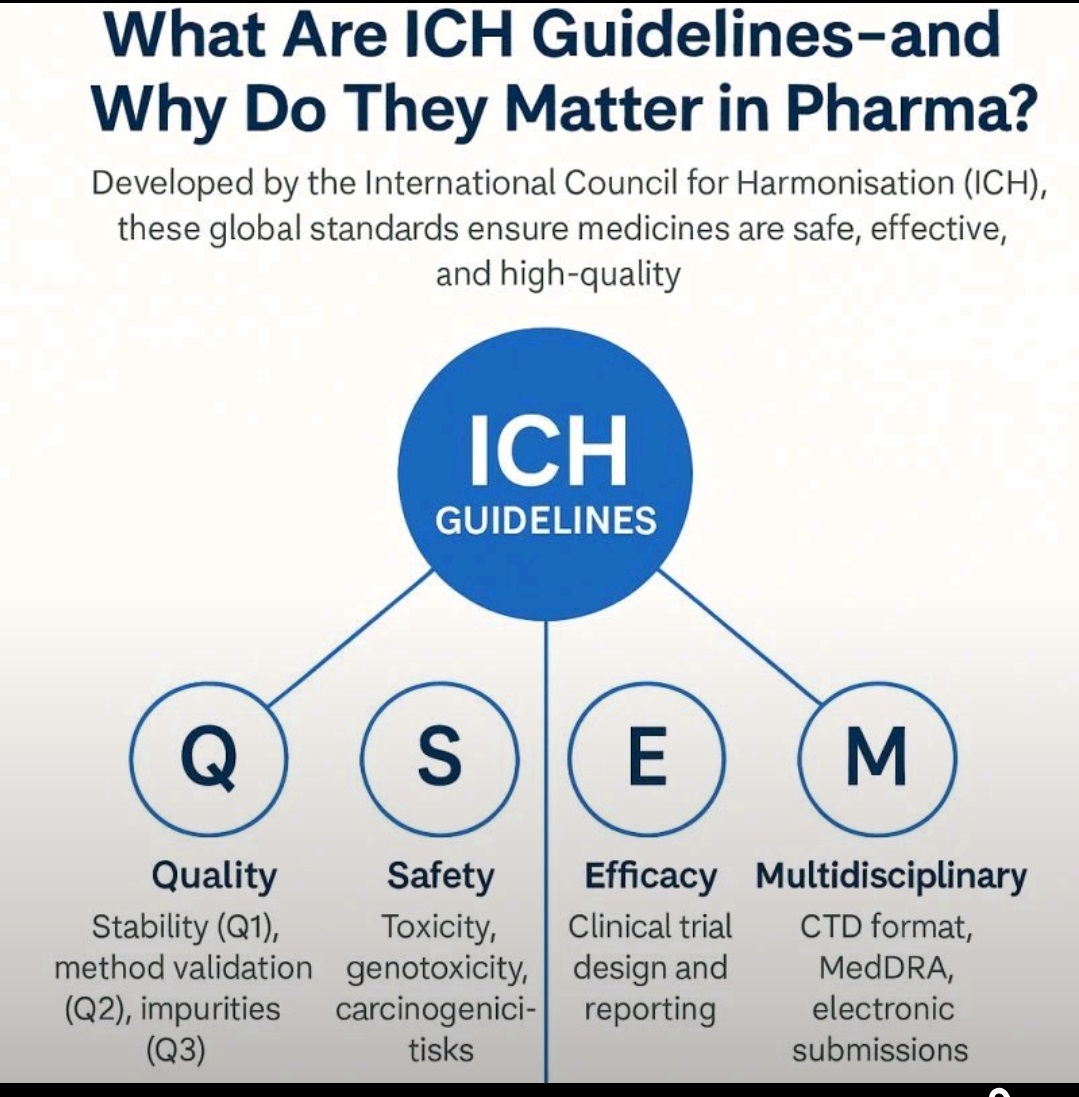
Definition/Abbreviation ICH Guidelines

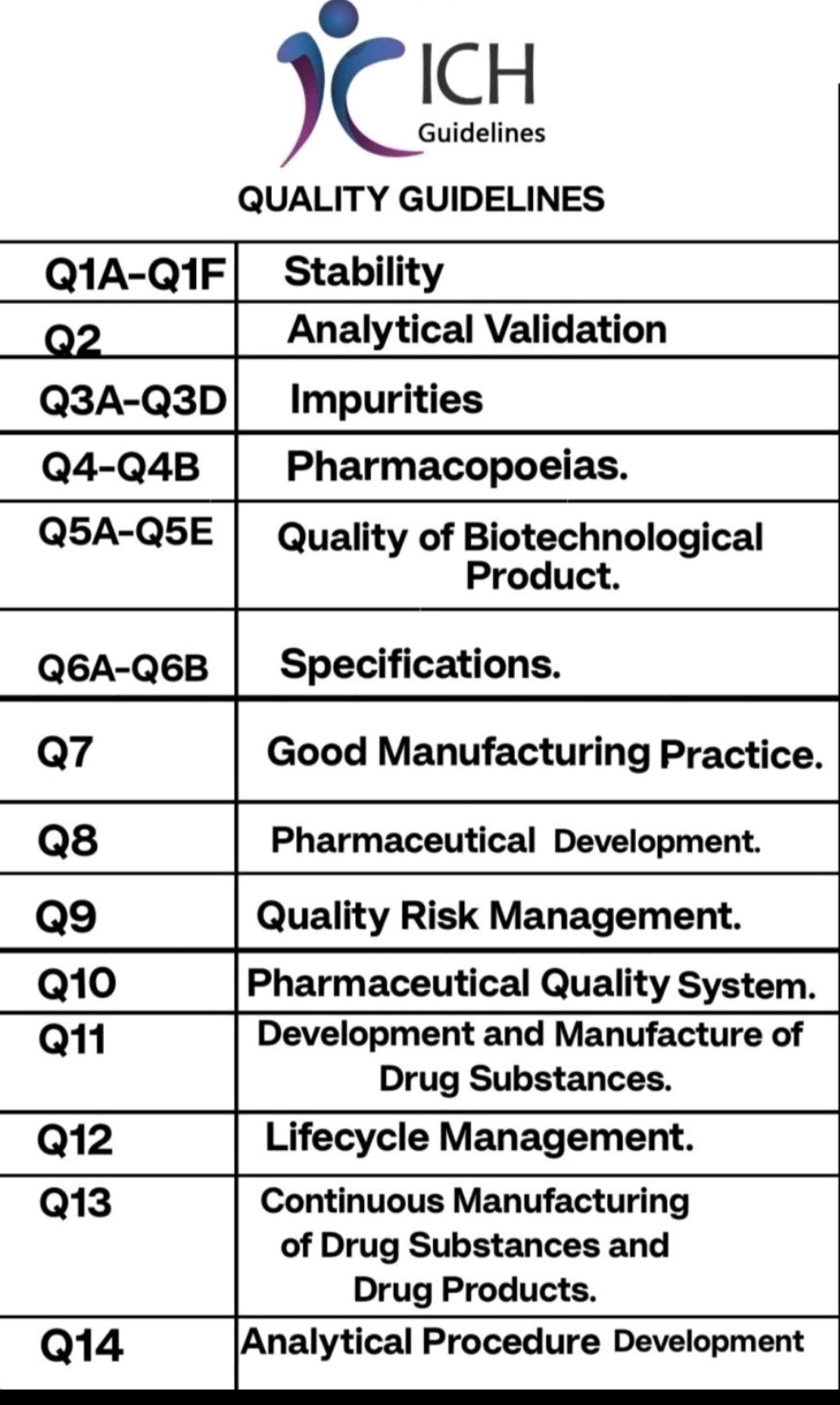
ICH Guideline-Quality
ICH Guideline-Quality


Categories
Definition/Abbreviation ICH Guidelines

Quality Risk Management (QRM)- ICH Q9

Quality Risk Management (QRM)- ICH Q9


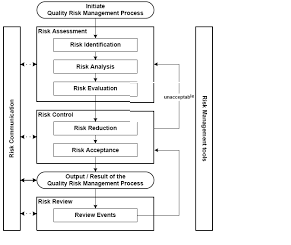
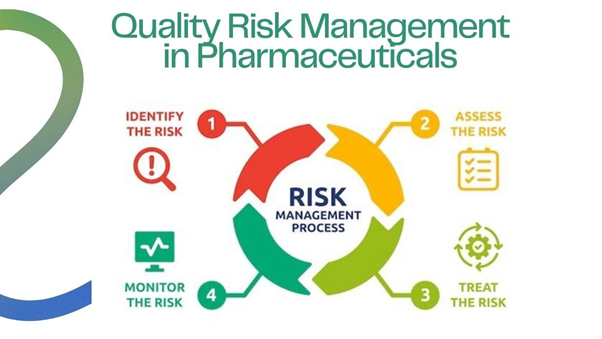
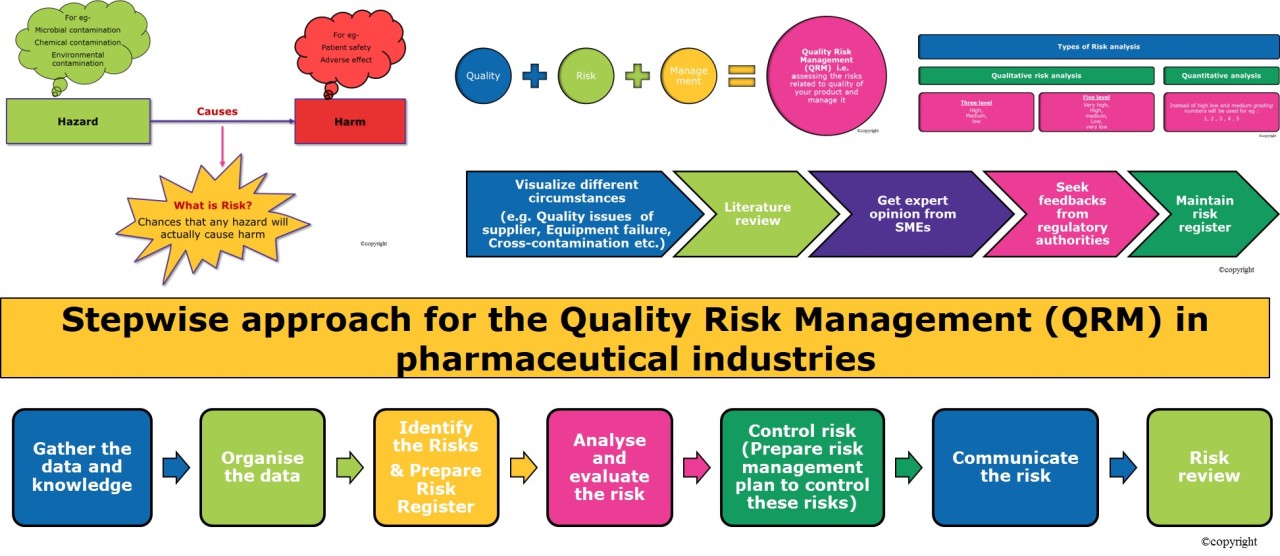
Quality Risk Management (QRM) is a systematic, science-based approach to identifying, assessing, controlling, communicating, and reviewing risks to product quality throughout its lifecycle. The goal is to ensure product safety and quality.

Key components of the QRM process

  • Risk Assessment:This involves identifying potential hazards and analyzing their severity, likelihood, and detectability. It establishes the level of risk to determine where to focus efforts.
  • Risk Control:This phase focuses on risk reduction plans, including implementing measures to mitigate or eliminate identified risks. After implementing controls, the remaining risk is evaluated to ensure it is at an acceptable level.
  • Risk Communication:This is a crucial and on-going process that involves clearly communicating identified risks and control strategies to all relevant stakeholders.
  • Risk Review:This involves a regular review of the quality risk management process to ensure the effectiveness of the controls and that risks remain at an acceptable level. New knowledge and experience are incorporated into this review.

Benefits of Quality Risk Management

  • Ensures product quality and safety:By proactively addressing risks, QRM minimizes defects and helps protect the safety of consumers.
  • Supports regulatory compliance:QRM is a vital tool for meeting and maintaining compliance with regulatory guidelines from agencies like the FDA and EMA.
  • Optimizes resources:It helps focus efforts on areas with the highest risk, which can lead to more efficient use of resources.
  • Improves decision-making:It promotes a data-driven approach to decision-making, based on scientific knowledge and evidence.
  • Reduces costs:Minimizing quality failures can lead to lower costs associated with recalls, reworks, and other quality-related issues.

Categories
Definition/Abbreviation ICH Guidelines

Quality by Design (QbD)

Quality by Design (QbD)


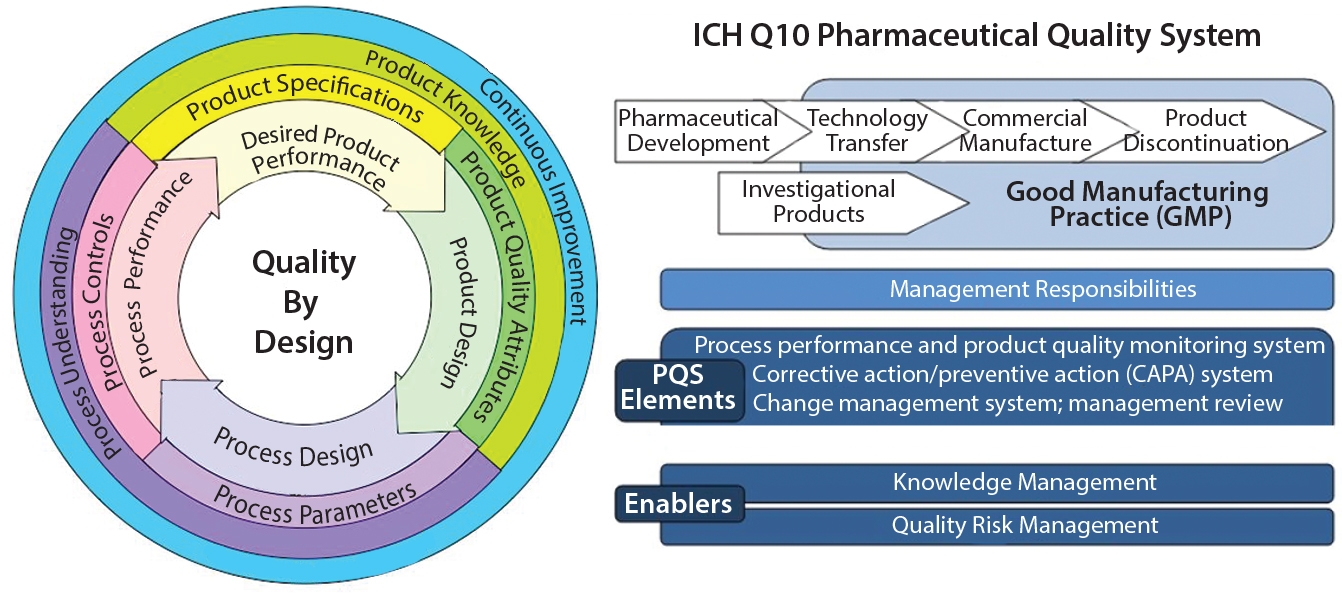
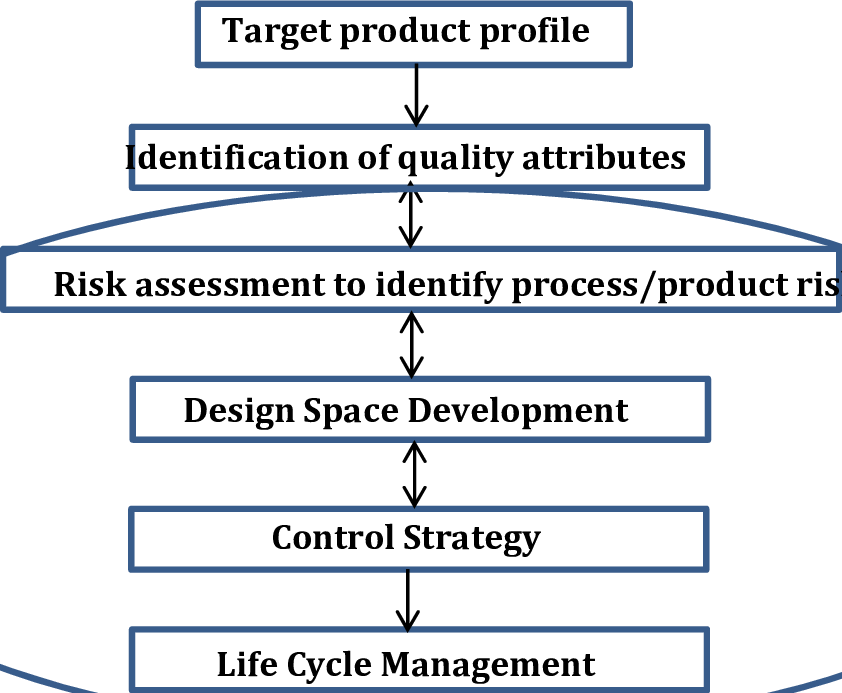
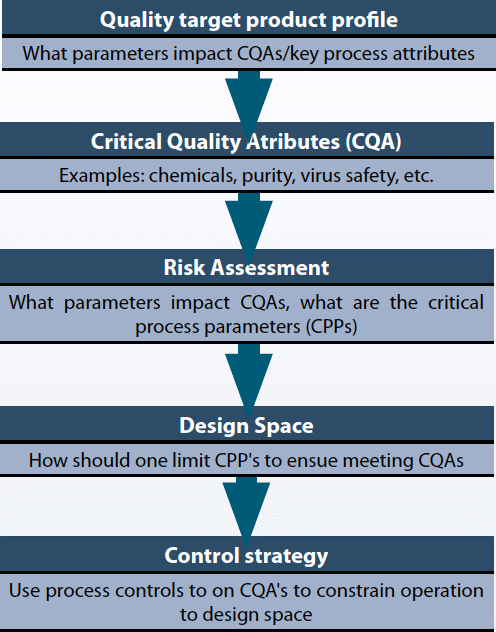
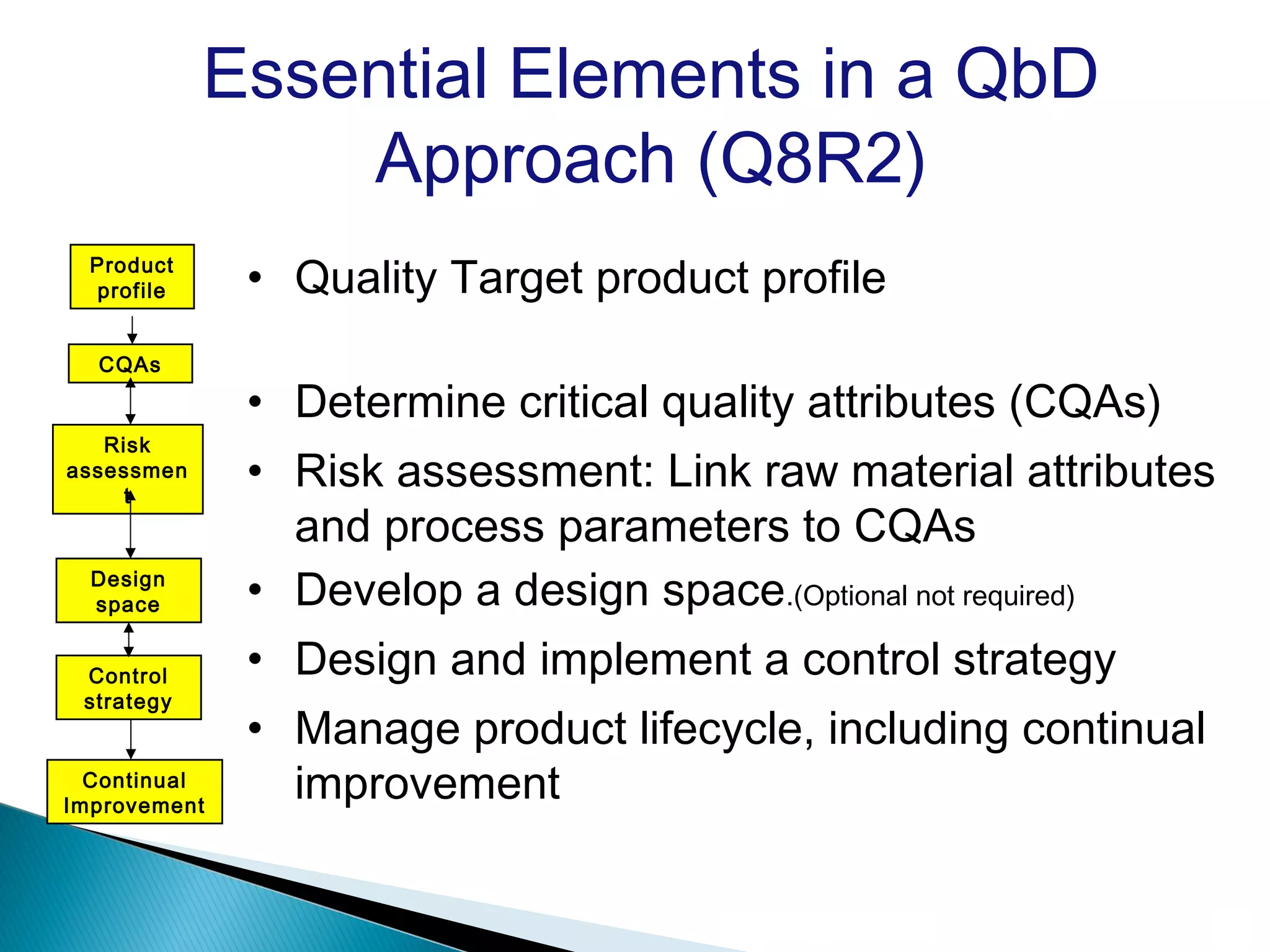
Quality by Design (QbD) is a systematic approach to product development that builds quality in from the start by focusing on a deep understanding of the product and its manufacturing process. It uses a science-based, risk-management approach to identify critical quality attributes (CQAs) and critical process parameters (CPPs), establishing a “design space” and control strategy to consistently meet quality targets throughout the product lifecycle.

Key principles and steps :-        
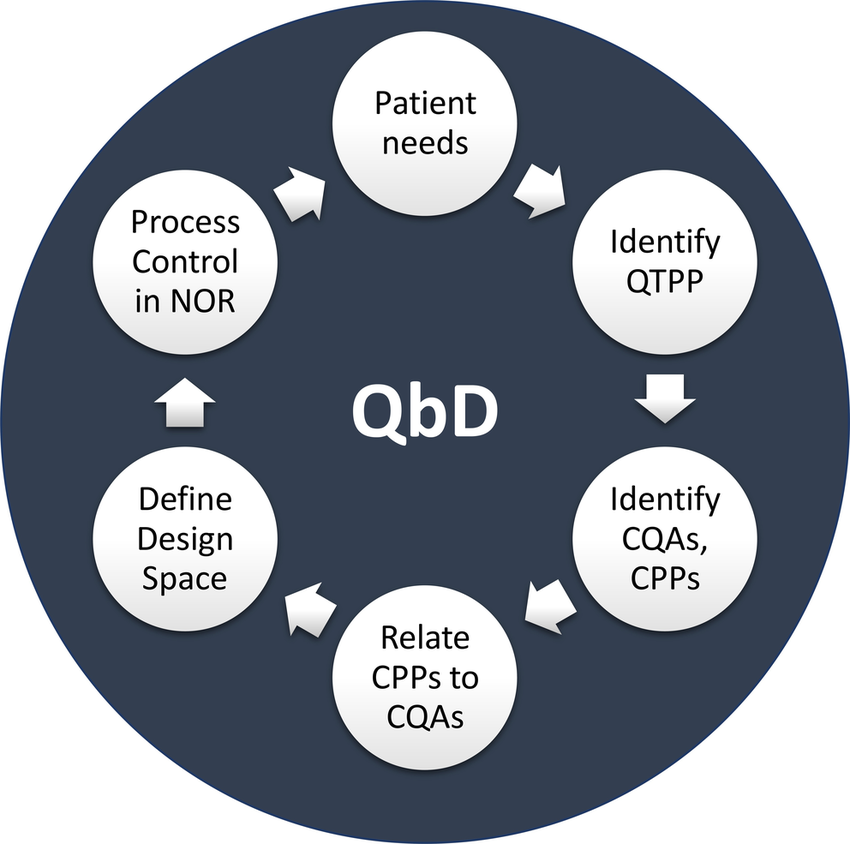
  • Start with the end in mind:Define clear objectives and a Quality Target Product Profile (QTPP), which outlines the desired characteristics of the final product.
  • Identify critical quality attributes (CQAs):Determine the measurable characteristics of the product that are essential for its performance and safety.
  • Identify and understand critical process parameters (CPPs):Identify the variables in the manufacturing process that have the most significant impact on the CQAs. This is done through experimentation, risk assessment, and statistical analysis.
  • Establish a design space:Define a multi-dimensional combination of input variables and process parameters that have been demonstrated to provide assurance of quality. This is the “safe operating zone” for manufacturing.
  • Develop a control strategy:Implement a plan to manage the CPPs within the design space to ensure that the product consistently meets its quality attributes.
  • Continuously improve:Use the understanding gained to support continuous improvement and innovation over the product’s lifecycle.

Categories
ICH Guidelines

ICH Quality Guidelines

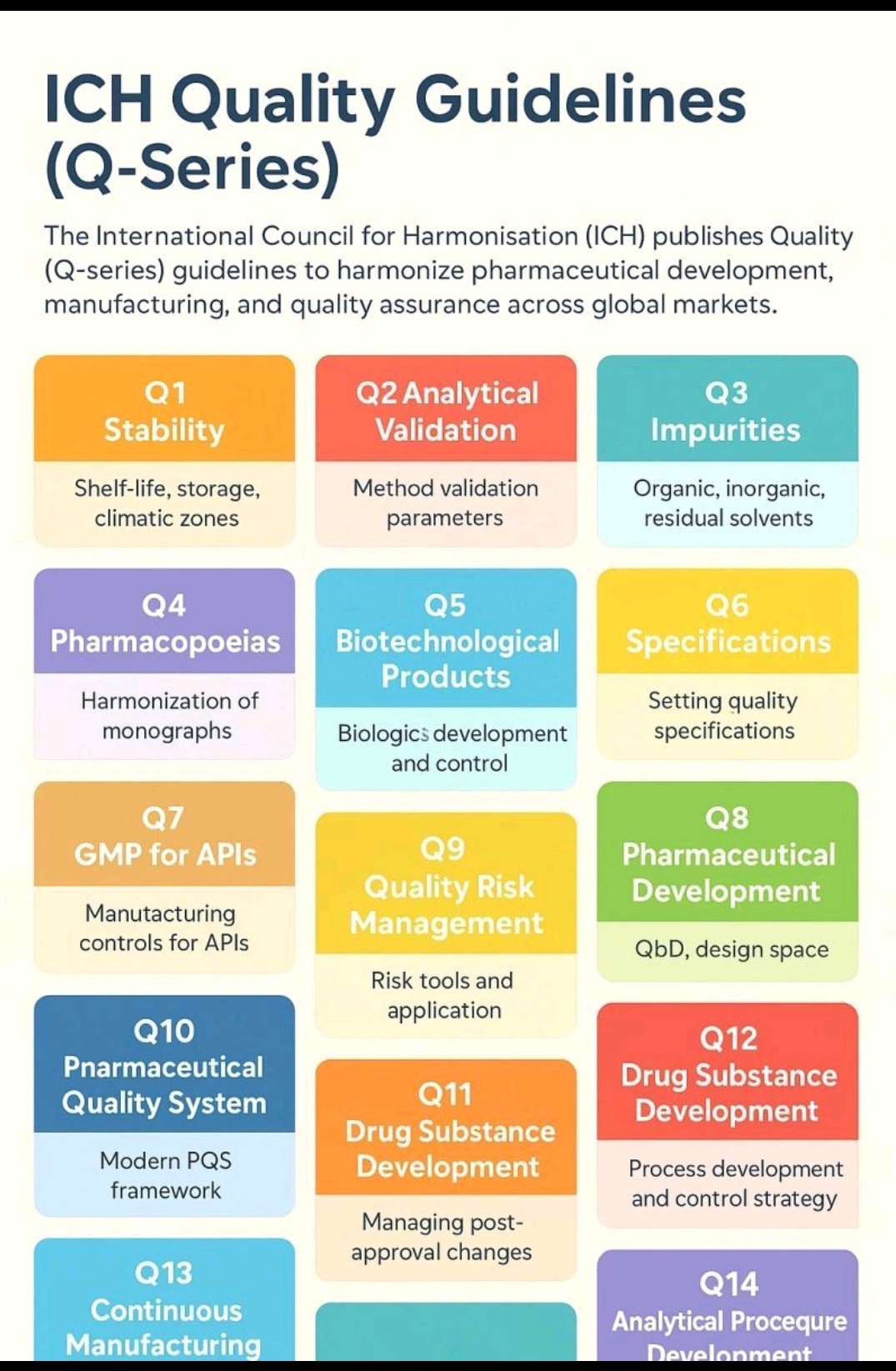
Here’s a list of ICH Quality Guidelines along with the direct hyperlinks to each guideline on the ICH website:

  1. Q1: Stability Testing

  • Q1A(R2) Stability Testing of New Drug Substances and Products-
  • Q1B Photostability Testing of New Drug Substances and Products
  • Q1C Stability Testing for New Dosage Forms
  • Q1D Bracketing and Matrixing Designs for Stability Testing of New Drug Substances and Products
  • Q1E Evaluation of Stability Data
  1. Q2: Analytical Validation

  • Q2(R1) Validation of Analytical Procedures: Text and Methodology
  1. Q3: Impurities

  • Q3A(R2) Impurities in New Drug Substances
  • Q3B(R2) Impurities in New Drug Products
  • Q3C(R8) Impurities: Residual Solvents
  • Q3D Guideline for Elemental Impurities
  • Q3E Guideline for extractables and leachables
  1. Q4: Pharmacopoeias

  • Q4A Pharmacopoeial Hormonisation
  • Q4B Evaluation and Recommendation of Pharmacopoeial Texts for Use in the ICH Regions
  1. Q5: Biotechnological Products

  • Q5A(R1) Stability Testing of Biotechnological/Biological Products
  • Q5B Analysis of the Stability of Biotechnological/Biological Products.
  • Q5C Good Manufacturing Practice (GMP) for Biotechnological/Biological Products.
  • Q5D Derivation and Characterization of Cell Substrates Used for Production of Biotechnological Products.
  • Q5E Comparability of  Biotechnological Products subject to changes in their manufacturing Process.
  1. Q6: Specifications

  1. Q7: Good Manufacturing Practice (GMP)

  • Q7 Good Manufacturing Practice for Active Pharmaceutical Ingredients (API)
  1. Q8: Pharmaceutical Development

  • Q8(R2) Pharmaceutical Development
  1. Q11: Development and Manufacture of Drug Substances

  • Q11 Development and Manufacture of Drug Substances (Chemical Entities and Biotechnological/Biological Entities)
  1. Q12: Pharmaceutical Product Lifecycle Management

  • Q12 Pharmaceutical Product Lifecycle Management
  1. Q13: Continuous Manufacturing

  • Q13 Continuous Manufacturing of Drug Substances and Drug Products

14. Q14: Analytical Procedure Development

  • Q14 Analytical Procedure Development

Note:- These links direct you to the official ICH website where you can access the full texts of each guideline. Each page contains the relevant guideline documents, details, and updates related to that particular quality standard.

error: Content is protected !!